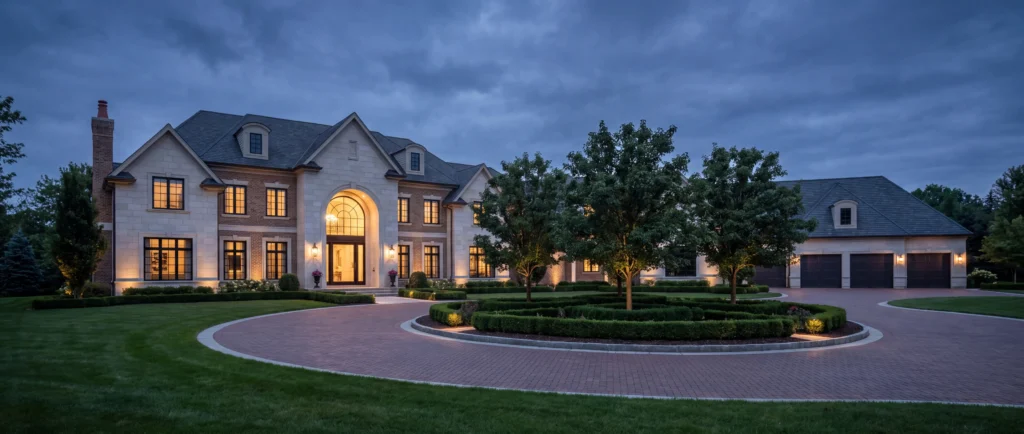
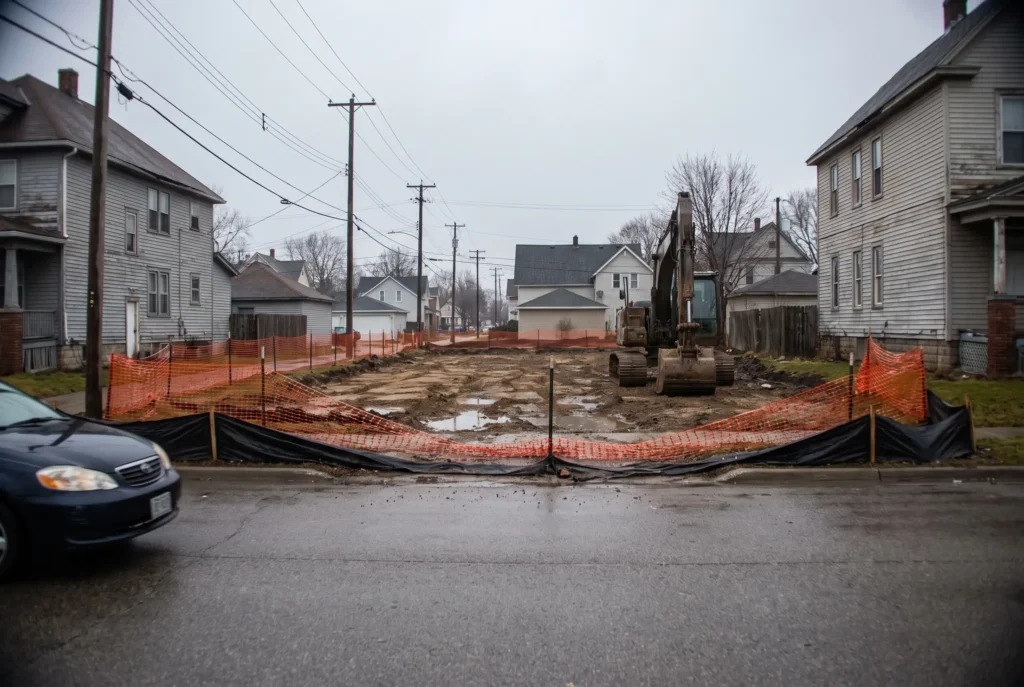
Teardown & Rebuild
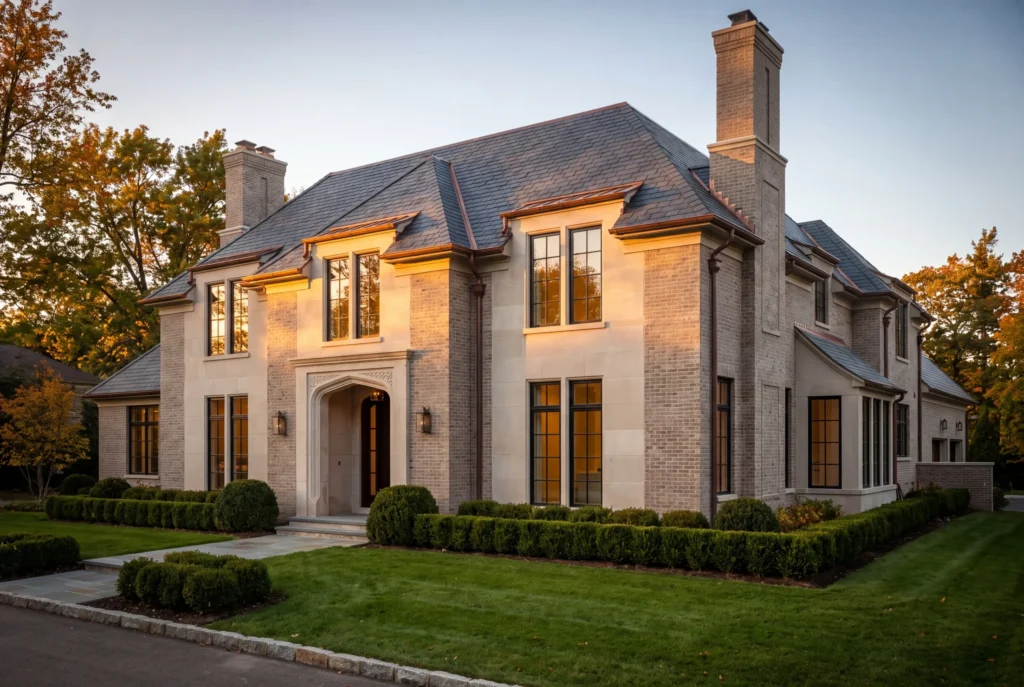
Why People Rebuild
The things that make a neighborhood worth living in cannot be built from scratch. Mature trees, established streets, a school district, a walk to town: those took decades.
Rebuilding keeps what you cannot buy elsewhere and replaces what no longer works: layouts built for a different era, ceiling heights, insulation and mechanicals at the end of their lives, and additions that never quite resolved.
It is also the realistic path in communities where vacant land has effectively run out. If you want to build in Birmingham or Bloomfield, in most cases you are buying a house in order to get the lot.
Not The Same As A Vacant Lot
You inherit the envelope rather than choosing it. The parcel’s existing dimensions, setbacks and lot coverage limits decide how large the new house can be and where it can sit. On an infill lot that buildable envelope is often noticeably smaller than the property looks, and it needs checking against your drawings before design gets far.
The demolition is its own project. It carries a separate permit, and municipalities set their own conditions: documentation of the existing house, utility disconnects witnessed and signed off, site fencing and erosion control in place before anything comes down.
The site is tight and it has neighbors. Deliveries, staging, dumpsters and machine access all have to work on a street with houses either side. Where the fence line goes on day one dictates how the rest of the build runs.
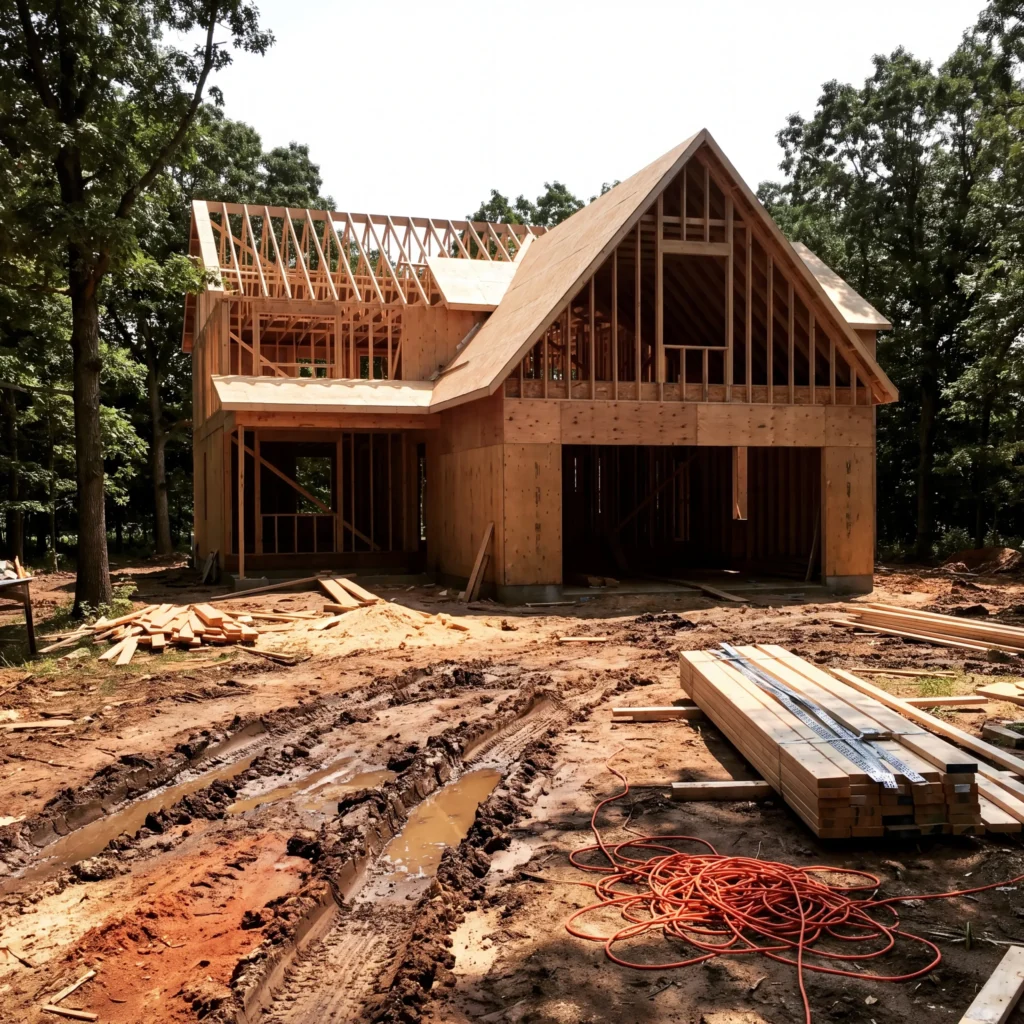
How A Rebuild Runs
- Walk the property together before you buy
- Confirm the buildable envelope: setbacks, lot coverage, height
- Establish whether the parcel sits in a historic or design review district
- Design within the envelope, with your architect
- Line-item budget and schedule agreed before anything is committed
- Demolition permit, utility disconnects, fencing and erosion control
- Demolition, removal and site preparation
- Foundation, framing and the new build through to final walkthrough
Birmingham, Bloomfield Hills, Bloomfield Township and Franklin each set their own demolition conditions and review process, so the sequence above is a shape rather than a checklist. We confirm the current requirements with the building department for your parcel before committing to a schedule.
For more detail, see our guide to the steps of a teardown and rebuild, or find your town in our service areas.
Questions About Teardown And Rebuild
Do you handle both the demolition and the new home?
We do. We arrange the utility disconnections, prepare the town’s applications, take the old house down, and build the new one. One team carries it from the first walk of the property to the final walkthrough.
How do I find out whether a house may be taken down?
That is the town’s decision for each property. Some homes and streets have historic protection, and every town has its own steps. We check with the town for your address before you commit to anything.
Should I talk to a builder before I buy a house for its lot?
Yes. What may replace the house shapes what the lot is worth to you.
Will the new home be limited by the old one?
The town’s rules for the lot apply to the new home: how much of the lot it may cover, how tall it may be, and how far it sits from the street and the neighbors. We go through them for your lot with your designer.
Where do you do teardown and rebuild work?
Most often in Birmingham, the Bloomfields, Franklin and nearby Oakland County towns, and across the other communities we build in.
See our guide to the steps of a teardown and rebuild, our guide to historic districts, and the town pages.